The principle: a cage of conductive material
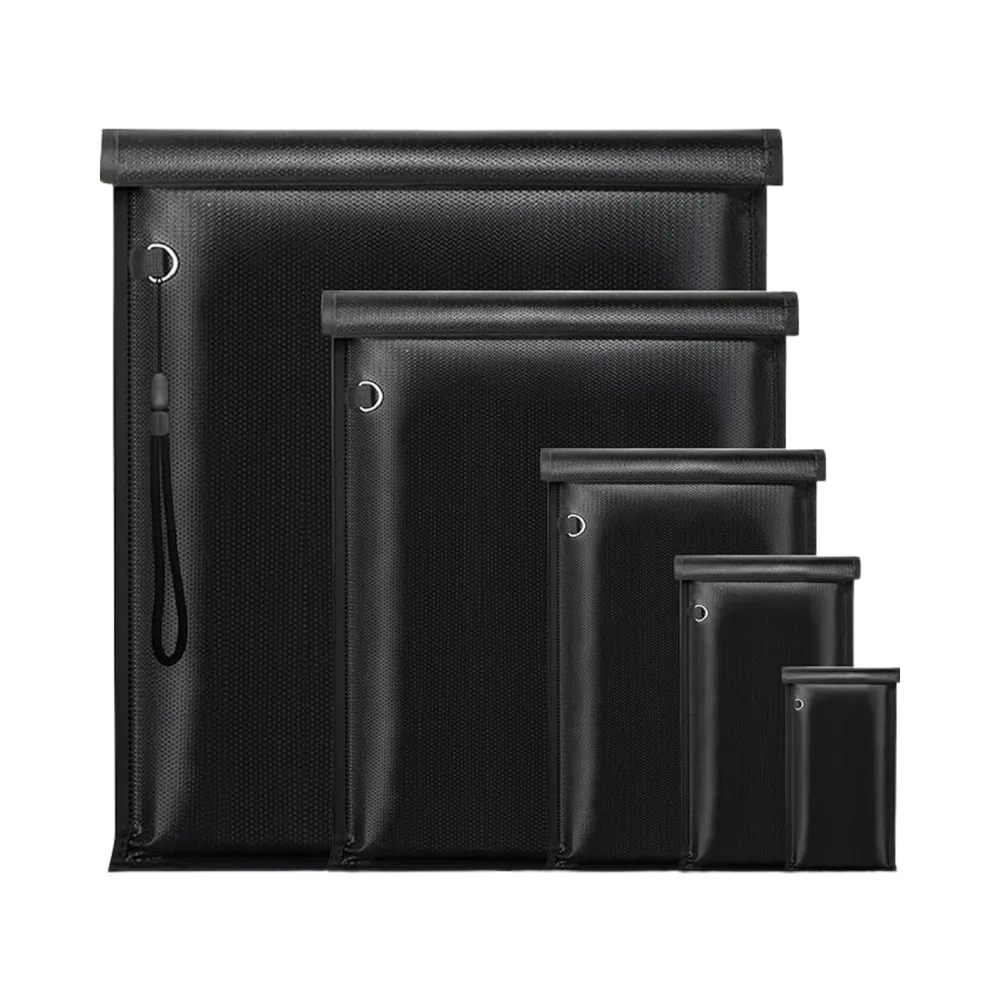
A Faraday bag is named after the Faraday cage: a sealed layer of conductive material that blocks electromagnetic signals from entering and blocks signals from inside reaching the outside. In practice that is a bag with multiple layers of metal mesh or metallised fabric, sewn so no seam or gap remains for a signal to slip through.
Once a device sits inside a good Faraday bag and the bag is fully sealed, it can no longer transmit or receive wifi, bluetooth, mobile network, GPS or NFC. To the outside world the device simply does not exist at that moment: no location, no incoming call, no background sync.
What people actually use them for
Car keys with keyless entry: relay attacks amplify your key’s signal from inside your house to your car on the driveway, without you noticing. Putting the key in a Faraday bag as soon as you are indoors stops this entirely.
Contactless payment cards and passports with an RFID chip: remote skimming remains possible as long as the chip can be actively reached. A bag with RFID shielding prevents a reader from reading the card from a distance.
Phones during sensitive conversations or border crossings: a device that is fully offline cannot be located remotely, hacked over the network, or silently activated to listen in.
Forensic evidence handling: investigators use Faraday bags to prevent a seized phone from being remotely wiped before its contents are copied. The same principle works in reverse for your own device.
What a Faraday bag does not solve
As soon as you take the device back out, the shielding is gone and it simply reconnects. The bag only protects while something is inside it, not afterwards. It is also not a substitute for a hardened operating system: a compromised phone is still compromised after you take it out of the bag, the bag only prevents anything going in or out during that period.
What to check before you buy one
Not every bag labelled "Faraday" actually blocks everything. Check the measured attenuation in decibels across the relevant frequency range (2G to 5G, wifi, bluetooth, GPS, NFC), the number of shielding layers, and whether the closure has full overlap rather than a zipper with a gap. A bag without an independently tested attenuation figure is a gamble.